
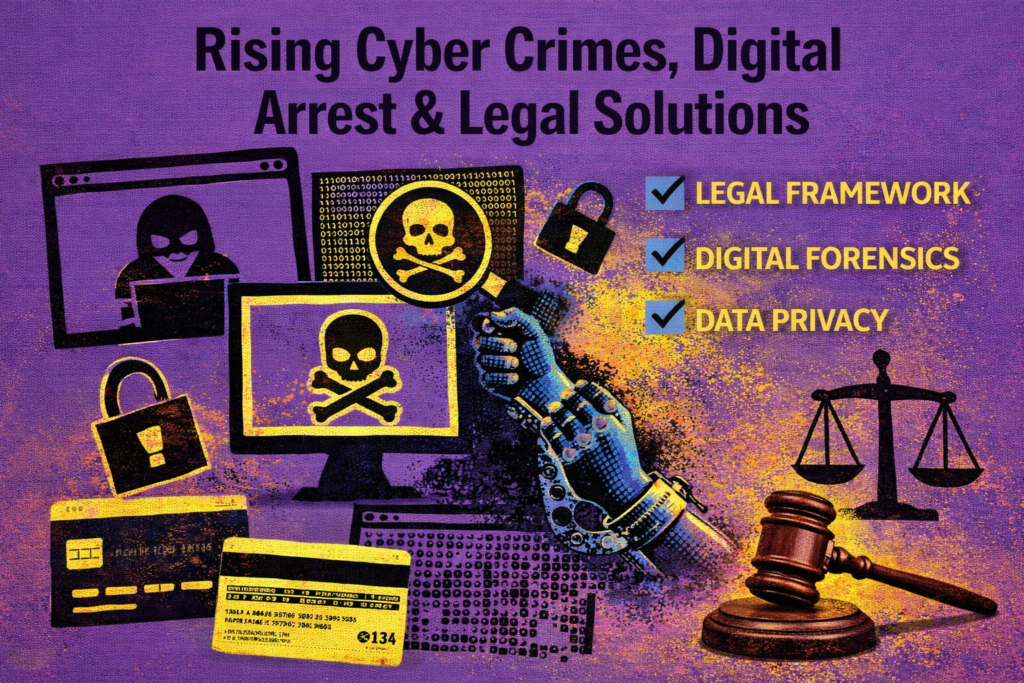
Cybercrimes have escalated dramatically with digital adoption, presenting novel challenges for law enforcement and legal systems. Understanding emerging threats, particularly sophisticated scams like digital arrest fraud, is essential for effective legal response and public protection.
India faces growing cyber threats across multiple dimensions. Financial frauds including phishing, vishing, and banking scams target millions. Identity theft and data breaches compromise personal information. Cyberbullying and online harassment affect vulnerable populations. Ransomware attacks cripple businesses and institutions. Additionally, misinformation campaigns threaten social harmony and democratic processes.
Digital Arrest Scam
A particularly insidious fraud involves impersonation of law enforcement officers. Scammers contact victims claiming to be police, CBI, or customs officials alleging serious offenses like drug trafficking or money laundering. Victims are told warrants exist for their arrest and must remain on video call under “digital arrest” to avoid physical detention. Under psychological pressure, victims transfer large sums supposedly to clear their names or for verification. This scam exploits fear of law enforcement and lack of awareness about legal procedures.
Legal Framework
Multiple laws address cybercrimes. The Information Technology Act, 2000 as amended in 2008 provides primary legal framework defining cybercrimes and penalties. Sections 66C and 66D specifically address identity theft and cheating using communication devices. Indian Penal Code provisions cover fraud, cheating, and impersonation applicable to online offenses. The Digital Personal Data Protection Act, 2023 governs data protection and privacy breaches. Additionally, specific provisions address cyberstalking, revenge porn, and child pornography.
Challenges in Investigation
Cybercrime investigation faces unique obstacles. Anonymity and encryption make perpetrator identification difficult. Cross-border nature of crimes complicates jurisdiction and cooperation. Technical expertise requirements exceed many law enforcement agencies’ capabilities. Digital evidence preservation and presentation require specialized protocols. Additionally, rapid technological evolution outpaces legal and investigative frameworks.
Law Enforcement Response
Authorities have developed specialized capabilities. Cybercrime cells operate at national, state, and district levels. I4C (Indian Cybercrime Coordination Centre) coordinates response and capacity building. National Cybercrime Reporting Portal enables online complaint registration. Training programs enhance investigators’ technical skills. Additionally, cooperation with financial institutions enables fund freezing and recovery.
Public Awareness Initiatives
Education plays crucial role in prevention. Government campaigns highlight common scam patterns and red flags. Media advisories warn about emerging threats like digital arrest fraud. Financial literacy programs teach safe online transaction practices. Schools incorporate cyber safety in curricula. Additionally, community outreach particularly targeting elderly and less digitally literate populations is essential.
Red Flags and Prevention
Citizens should recognize warning signs of scams. Legitimate law enforcement never demands immediate payment or conducts arrests through video calls. Unsolicited calls claiming serious legal issues require verification through official channels. Pressure tactics demanding urgent action without proper documentation indicate fraud. Requests for personal information or financial transfers should raise suspicion. Additionally, professional communications from official email addresses rather than generic accounts validate authenticity.
Victim Support
Supporting cybercrime victims requires comprehensive approach. Prompt reporting to cybercrime portals and local police enables investigation. Financial institutions should be immediately notified for potential fund recovery. Psychological counseling addresses trauma from victimization. Legal aid assists in navigating complaint and prosecution processes. Additionally, victim protection from further targeting or harassment is essential.
Technological Solutions
Technology both creates and addresses cyber threats. AI-powered fraud detection identifies suspicious patterns. Blockchain technology enhances transaction security. Multi-factor authentication reduces unauthorized access. Biometric verification strengthens identity protection. Additionally, cybersecurity tools protect devices and networks from intrusion.
International Cooperation
Cross-border cybercrime requires global coordination. Mutual legal assistance treaties facilitate evidence sharing and extradition. Interpol channels enable international investigation cooperation. Bilateral agreements expedite response to transnational crimes. Harmonization of cyber laws reduces jurisdictional conflicts. Additionally, capacity building assistance strengthens global cybersecurity.
Legislative Reforms
Evolving threats require continuous legal adaptation. Faster judicial processes through dedicated cybercrime courts could expedite justice. Enhanced penalties reflecting crime severity deter offenders. Victim compensation mechanisms address financial losses. Data protection enforcement ensuring company accountability prevents breaches. Additionally, regulating emerging technologies like AI and cryptocurrencies prevents misuse.
Way Forward
Effective cybercrime response requires multi-pronged strategy. Strengthening law enforcement capacity through training and resources is essential. Public awareness campaigns must intensify reaching all demographics. Technology platforms must ensure user safety through robust security measures. Legal frameworks should evolve adapting to technological changes. Additionally, international cooperation must strengthen addressing transnational nature of cyber threats.
Cybersecurity is shared responsibility requiring vigilance from individuals, institutions, and government. Informed citizens combined with effective law enforcement create resilient defense against evolving cyber threats.
References:
- Information Technology Act, 2000
- Indian Penal Code, 1860
- Digital Personal Data Protection Act, 2023
National Cyber Security Policy