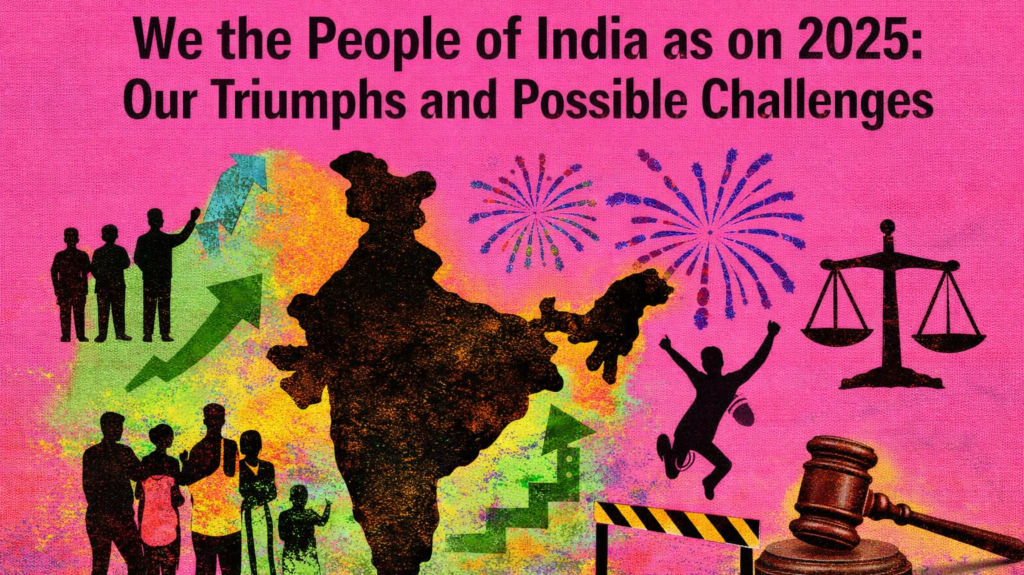
As India approaches the 75th anniversary of its Republic, examining the journey reveals remarkable achievements alongside persistent challenges. Understanding both is essential for charting the path toward a more just and prosperous nation.
India’s democratic resilience stands as significant triumph. Regular elections across local, state, and national levels demonstrate institutional stability. Peaceful power transfers between different political parties affirm democratic maturity. Vibrant civil society and free press, despite occasional pressures, maintain accountability. Independent judiciary, though burdened, protects constitutional values. Additionally, political participation across diverse social groups reflects expanding democratic consciousness.
Economic Progress
Economic transformation since independence is substantial. GDP growth has elevated India to among world’s largest economies. Poverty reduction, while incomplete, has lifted millions into middle class. Digital infrastructure revolution connects remote villages to global networks. Startup ecosystem emergence demonstrates entrepreneurial energy. Additionally, space program achievements reflect scientific and technological capabilities.
Social Development
Progress in social indicators shows improvement in living standards. Literacy rates have increased significantly though quality concerns remain. Life expectancy has risen reflecting better healthcare access. Women’s participation in education and workforce has improved. Legal protections against discrimination have strengthened. Additionally, awareness about rights and social justice has expanded.
Scientific and Technological Advances
India’s contributions to global knowledge demonstrate growing capabilities. Information technology sector has achieved global prominence. Pharmaceutical industry provides affordable medicines worldwide. Renewable energy capacity expansion addresses climate challenges. Digital payment infrastructure leads globally in transaction volumes. Additionally, COVID-19 vaccine development showcased biotechnology capabilities.
Persistent Challenges
Despite progress, significant challenges require attention. Economic inequality has widened with wealth concentration increasing. Unemployment particularly youth unemployment remains high. Agricultural distress continues affecting rural livelihoods. Infrastructure gaps in health, education, and basic services persist. Additionally, environmental degradation threatens sustainability.
Social Fissures
Social cohesion faces multiple pressures. Caste-based discrimination persists despite legal prohibitions. Religious polarization has intensified in recent years. Gender-based violence continues at alarming rates. Regional disparities create development imbalances. Additionally, social media amplifies divisions and spreads misinformation.
Institutional Concerns
Democratic institutions face various challenges. Judicial pendency undermines access to justice with millions of cases pending. Police reforms remain incomplete despite Supreme Court directives. Electoral funding opacity raises governance questions. Bureaucratic efficiency requires improvement for service delivery. Additionally, accountability mechanisms need strengthening.
Environmental Crisis
Ecological challenges pose existential threats. Air pollution in urban areas reaches hazardous levels. Water scarcity affects millions with groundwater depletion accelerating. Climate change impacts including extreme weather events increase. Biodiversity loss threatens ecosystem services. Additionally, waste management crisis particularly plastic pollution requires urgent addressing.
Federal Relations
Centre-state dynamics face periodic tensions. Fiscal federalism debates over resource sharing continue. Policy implementation variations across states create inconsistencies. Political differences sometimes hamper cooperative federalism. Inter-state disputes over resources remain unresolved. Additionally, balancing national integration with regional aspirations requires careful navigation.
Youth and Future
India’s demographic dividend presents opportunity and challenge. Quality education ensuring employability requires massive investment. Skill development matching job market needs is essential. Mental health concerns among youth are rising. Political participation and constructive engagement need encouragement. Additionally, sustainable development ensuring intergenerational equity is crucial.
Constitutional Values
Preserving constitutional values remains ongoing challenge. Secularism faces pressures from religious majoritarianism. Socialist commitments question amid market-oriented policies. Democratic spirit requires protection from authoritarian tendencies. Republican ideals demand strengthening institutional independence. Additionally, fraternity needs nurturing amid social divisions.
Path Forward
Realizing India’s potential requires comprehensive efforts. Inclusive economic growth benefiting all sections must be prioritized. Quality education and healthcare as rights need ensuring. Strengthening democratic institutions and rule of law is essential. Environmental sustainability must guide development policies. Social harmony through dialogue and mutual respect should be cultivated. Additionally, corruption reduction through transparency and accountability will improve governance.
Conclusion
“We, the People of India” have achieved much since adopting our Constitution. Yet the journey toward justice, liberty, equality, and fraternity continues. Each generation must recommit to constitutional values, address contemporary challenges, and build upon achievements. India’s future depends on collective commitment to inclusive development, democratic values, and sustainable progress. The Constitution provides the framework; citizens must breathe life into it through conscious effort and responsible citizenship.
References:
- Constitution of India, 1950
- Economic Survey and Census data
- Human Development Reports
- Academic studies on contemporary India