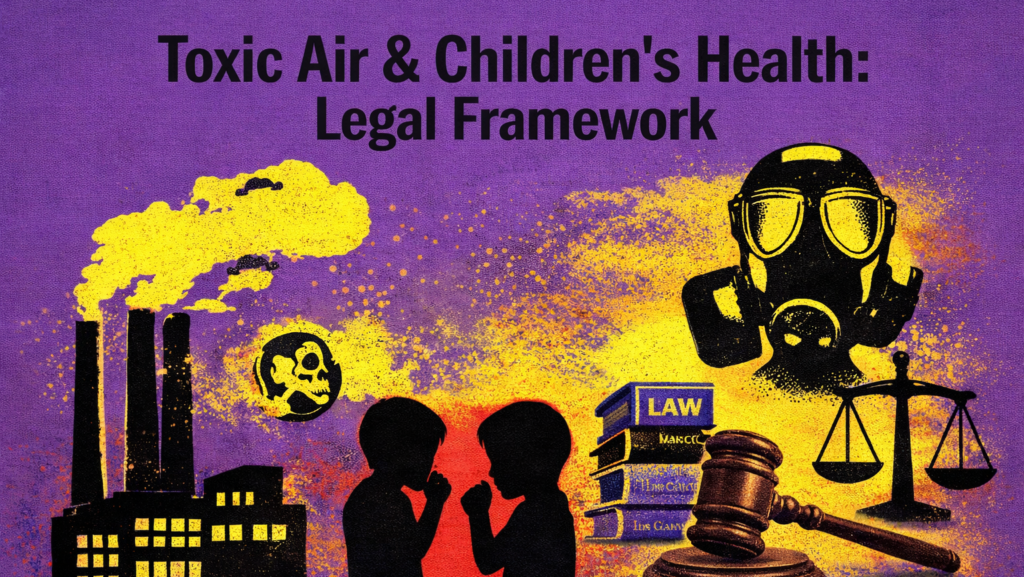
Air pollution poses grave threats to public health, with children particularly vulnerable due to developing respiratory and immune systems. India’s legal framework increasingly recognizes this special vulnerability, demanding enhanced protective measures.
Children face disproportionate air pollution risks. Their higher breathing rates relative to body weight increase pollutant exposure. Developing lungs and immune systems suffer greater damage from toxic air. Reduced lung function in childhood persists into adulthood affecting lifelong health. Cognitive development and academic performance decline with pollution exposure. Additionally, increased respiratory infections, asthma, and allergies burden children in polluted environments.
Constitutional Protections
The Constitution provides foundations for children’s environmental rights. Article 21’s right to life encompasses healthy environment essential for child development. Article 21A guaranteeing free and compulsory education requires pollution-free school environments. Article 24 prohibiting child labor in hazardous conditions extends to pollution exposure. Directive Principles under Article 39 mandate state protection of children’s health. Additionally, Article 47 directs the state to improve public health and living standards.
Statutory Framework
Multiple laws address air quality and child health. The Air (Prevention and Control of Pollution) Act, 1981 establishes pollution control mechanisms and standards. The Environment (Protection) Act, 1986 provides overarching environmental protection authority. The Commission for Air Quality Management Act, 2021 specifically targets National Capital Region’s air crisis. Motor Vehicles Act regulations limit vehicular emissions. Additionally, guidelines for school locations and infrastructure consider air quality factors.
Judicial Interventions
Courts have taken proactive stances on children’s air quality rights. Directions mandate installation of air purifiers in schools during high pollution periods. Orders require pollution reduction measures before winter months when children are most vulnerable. Restrictions on construction activities near schools during academic sessions have been imposed. Emergency measures including school closures during severe pollution episodes are mandated. Additionally, pollution monitoring around educational institutions has been ordered.
Special Measures for Schools
Specific protections focus on educational environments. Guidelines restrict establishing schools in high pollution zones. Indoor air quality standards for school buildings are being developed. Green zones around schools must be maintained to reduce pollution exposure. Emergency response protocols for extreme pollution days are required. Additionally, health monitoring programs track pollution impacts on students.
Graded Response Action Plan
The Graded Response Action Plan (GRAP) implements progressive measures based on air quality levels. Moderate pollution triggers public advisories especially for vulnerable groups including children. Poor air quality requires enhanced measures like restricting outdoor activities for children. Very poor conditions mandate school closure considerations and stricter emission controls. Severe pollution necessitates emergency measures including complete school shutdowns.
Preventive Measures
Long-term solutions require comprehensive approaches. Emission control from vehicles, industries, and construction must be strengthened. Urban planning should create green spaces and reduce pollution sources near residential and educational areas. Public transportation promotion reduces vehicular emissions. Stubble burning and waste burning must be eliminated. Additionally, clean energy transition addresses fundamental pollution sources.
Monitoring and Enforcement
Effective child protection requires robust monitoring. Air quality monitoring stations should be established near schools and residential areas. Real-time data must inform protective measures and emergency responses. Enforcement against pollution sources must be strict and consistent. Health surveillance tracking pollution’s impacts on children informs policy adjustments. Additionally, public awareness programs educate parents and communities about protective measures.
The Way Forward
Protecting children from toxic air demands multi-pronged strategies including stringent enforcement of pollution control laws, emergency protocols prioritizing child protection, long-term emission reduction through structural changes, and integration of air quality considerations into urban planning and development policies. Political will and sustained commitment are essential for meaningful progress.
Every child deserves to breathe clean air. Legal frameworks must translate this right into lived reality through effective implementation and continuous improvement.
References:
- Constitution of India, Articles 21, 21A, 24, 39, 47
- Air (Prevention and Control of Pollution) Act, 1981
- Commission for Air Quality Management Act, 2021