
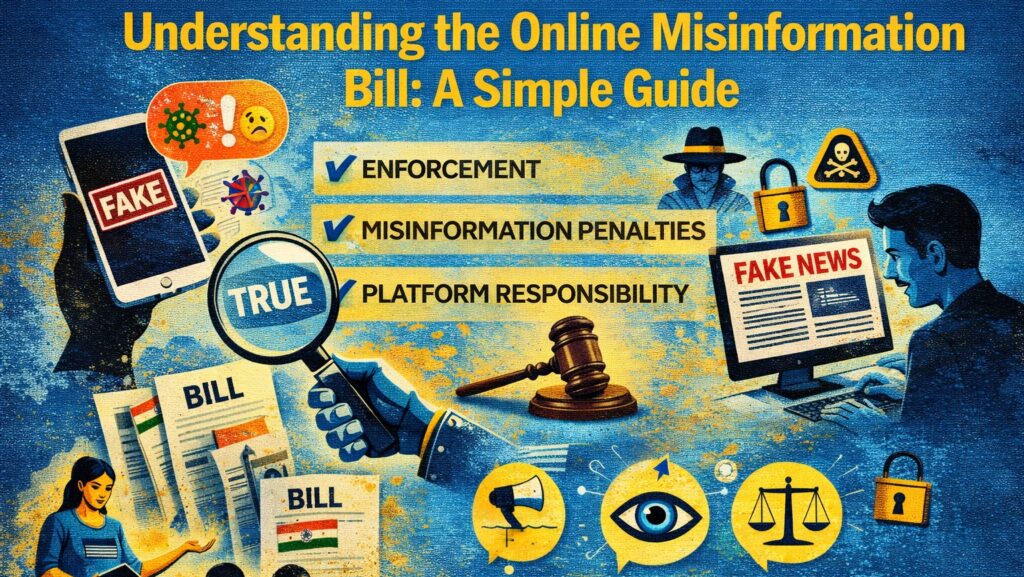
As digital platforms become primary sources of information, the spread of false content poses serious challenges. Proposed legislation addressing online misinformation aims to balance free speech with public safety, though the specific framework continues to evolve.
Misinformation refers to false or misleading information shared without malicious intent. Disinformation, in contrast, involves deliberately spreading false information to deceive. Both can cause significant harm, from public health crises to social unrest.
Why Regulation is Being Considered
Recent years have witnessed the rapid spread of fake news affecting elections, public health decisions, and communal harmony. During emergencies like the pandemic, misinformation led to dangerous behaviors and hindered official responses. Current laws like the Information Technology Act, 2000, provide limited tools to address these challenges comprehensively.
Key Proposed Measures
Draft frameworks typically include provisions requiring platforms to identify and remove demonstrably false content, establish fact-checking mechanisms, and maintain transparency about content moderation. Penalties for non-compliance may include fines and restrictions on platform operations.
Concerns and Challenges
Critics raise valid concerns about potential censorship and the subjective nature of determining “truth.” Questions arise about who decides what constitutes misinformation and whether such powers could be misused to silence legitimate criticism. Balancing rapid response with due process presents practical challenges.
The Free Speech Balance & Moving Forward
Any legislation must respect Article 19(1)(a) of the Constitution, which guarantees freedom of speech and expression. Restrictions must be reasonable and fall within permitted grounds under Article 19(2), such as public order, decency, or morality.
Effective regulation requires multi-stakeholder involvement including platforms, civil society, and independent fact-checkers. Transparency in decision-making, robust appeal mechanisms, and clear definitions are essential for any framework to succeed while protecting fundamental rights.
References:
- Information Technology Act, 2000
- Constitution of India, Article 19
- Draft regulations under IT Rules, 2021