
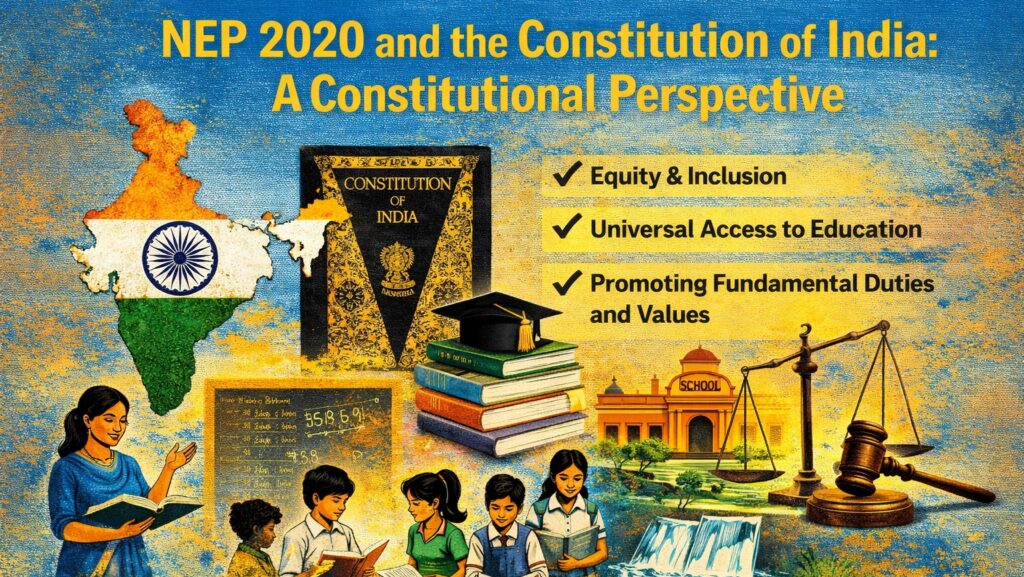
The National Education Policy 2020 represents India’s most comprehensive education reform since 1986. While it proposes transformative changes, its implementation must align with constitutional principles that govern education in India.
Education appears in the Concurrent List (List III, Entry 25) of the Seventh Schedule, allowing both Union and State governments to legislate. The Right to Education under Article 21A guarantees free and compulsory education for children aged 6-14 years. The Directive Principles of State Policy under Articles 41, 45, and 46 mandate the state to provide educational opportunities.
NEP 2020’s Constitutional Alignment
The policy’s emphasis on universalization of education from pre-primary to secondary level strengthens Article 21A’s mandate. Its focus on equity aligns with Article 14’s equality principle and Article 15’s prohibition of discrimination. The promotion of Indian languages and culture resonates with Article 29’s protection of cultural and educational rights.
Since education falls under the Concurrent List, NEP 2020’s implementation requires state cooperation. States retain autonomy in adapting the policy to local needs while maintaining national standards. This federal balance is crucial for constitutional validity.
Potential Constitutional Concerns
The policy’s centralized vision for curriculum and assessment may face scrutiny regarding state autonomy. The proposed Higher Education Commission of India must ensure it doesn’t infringe upon state legislative powers. Additionally, implementation must not compromise minority educational institutions’ rights under Articles 29 and 30.
The Path Ahead
Successful implementation requires dialogue between Centre and States, respecting constitutional federalism. Regular assessment of whether reforms uphold fundamental rights and directive principles is essential. The policy’s ambitious goals must be achieved within constitutional boundaries, ensuring education remains a fundamental right accessible to all.
References:
- Constitution of India, 1950
- National Education Policy, 2020
- Right of Children to Free and Compulsory Education Act, 2009