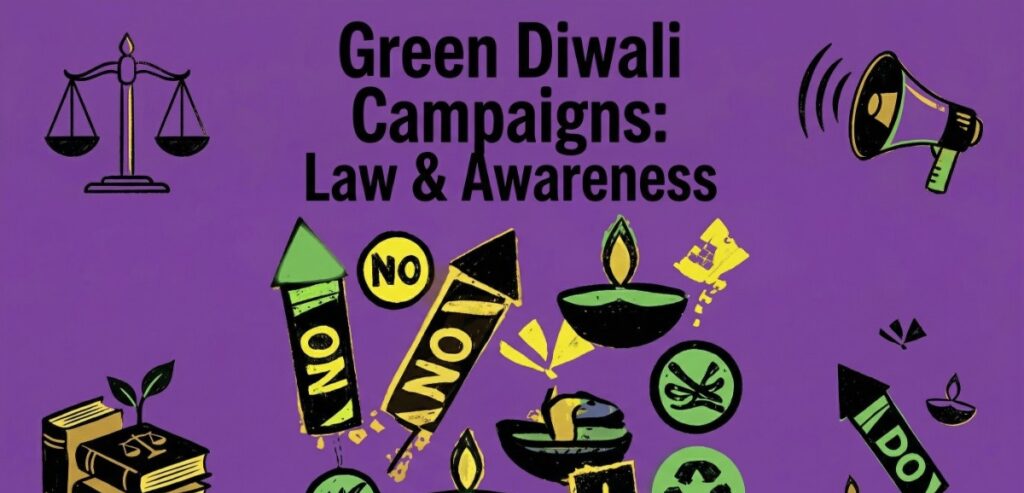
Diwali celebrations increasingly face scrutiny due to environmental and health impacts of firecrackers. Legal interventions and awareness campaigns promoting eco-friendly celebrations reflect evolving understanding of balancing cultural traditions with environmental protection and public health.
Firecracker use during Diwali significantly deteriorates air quality, with particulate matter levels often reaching hazardous levels. Noise pollution affects vulnerable populations including elderly persons, infants, and individuals with health conditions. Chemical pollutants from fireworks contaminate soil and water. Additionally, firecracker-related injuries and fires pose direct safety risks.
Legal Framework
Multiple laws address firecracker regulation. The Environment (Protection) Act, 1986 authorizes restrictions on activities causing pollution. The Explosives Act, 1884 regulates manufacture and sale of fireworks. Municipal laws grant local authorities power to restrict firecracker use in specific areas. The Noise Pollution (Regulation and Control) Rules, 2000 set permissible noise levels in different zones.
Judicial Interventions
The Supreme Court has issued several significant directions on firecrackers. In 2018, the Court permitted only green crackers with reduced emissions. Restrictions on timing of firecracker use, typically limiting bursting to specific hours, have been mandated. Bans on certain highly polluting firecracker types have been upheld. Additionally, online sale and delivery of firecrackers have been regulated to ensure compliance with environmental norms.
Green Crackers Initiative
The Council of Scientific and Industrial Research developed green crackers with reduced emission levels. These alternatives use less harmful chemicals and produce less air and noise pollution. However, challenges remain in ensuring genuine green crackers reach markets and preventing mislabeling of conventional fireworks as eco-friendly.
Awareness Campaigns
Government and civil society organizations conduct extensive awareness programs. Campaigns highlight health impacts of air pollution particularly on children and elderly persons. Alternative celebration methods including lighting diyas, laser shows, and community events are promoted. Educational programs in schools teach children about environmental responsibility. Social media campaigns encourage citizens to choose eco-friendly celebrations.
Cultural Sensitivity and Legal Balance
Regulations attempt to balance environmental concerns with cultural traditions. Courts recognize Diwali’s cultural significance while emphasizing that fundamental rights to health and clean environment cannot be compromised. The approach focuses on harm reduction rather than complete prohibition, allowing modified celebrations that minimize environmental impact.
Implementation Challenges
Enforcement faces several obstacles. Compliance monitoring across vast populations proves difficult. Illegal firecracker sales, particularly of banned varieties, continue despite regulations. Public resistance to restrictions sometimes undermines enforcement efforts. Additionally, interstate variations in regulations create inconsistencies.
Way Forward
Effective green Diwali promotion requires sustained awareness emphasizing health impacts alongside cultural respect, stricter enforcement of regulations with meaningful penalties for violations, support for green cracker manufacturing and distribution, and community-led initiatives promoting alternative celebrations. Education fostering long-term behavioural change is ultimately most sustainable. Transitioning to environmentally conscious celebrations demonstrates that cultural traditions can evolve responsibly, protecting both heritage and health for future generations. Another workable measure in this context would be to allow the people to burst green crackers in specific zones which are away from the residential complexes during specific hours. This will not only prevent incidents of fires but will also curb the noise pollution cause. Bursting crackers in specific zones which can be open grounds away from the residential complexes can save the ailing, old and children from directly breathing the gases emitted by the explosions. Such specific zones or organised cracker bursting events can be monitored by public authorities with emergency services on immediate standby.
References:
- Environment (Protection) Act, 1986
- Supreme Court orders on firecracker regulation
- Noise Pollution (Regulation and Control) Rules, 2000